

RBA: another hike possible, EV sales surge, Qantas upbeat about outlook
News in brief
Westpac announced a slight jump in its half-year profit to $3.5 billion, following a surge in lending and deposits. While the bank, and its CEO Anthony Miller, are yet to see the impact of higher oil prices on customers, they are bracing for tougher economic times and have increased bad debt buffers.
A record 16 per cent of cars sold in Australia last month were electric vehicles, as buyers, worried about sky-rocketing fuel prices, made the switch to EVs. That’s about 15,500 electric vehicle sales in April, more than double the level of 12 months ago.
Qantas CEO Vanessa Hudson yesterday said demand for travel within Australia is growing more slowly but not going backwards. She also noted that higher interest rates can help Qantas’ more affluent customers – business and first class – and that’s good for the carrier.
Wesfarmers boss Robb Scott said Australian businesses are set to face wage pressures as a result of inflation. Wesfarmers is one of the country’s largest private-sector employees with around 120,000 staff across Bunnings, Kmart, Officeworks and its health and industrial divisions.
The world’s biggest fashion conglomerate, LVMH, is exploring the sale of some of its fashion houses, beauty labels and alcoholic drinks brands in one of the most significant strategic shifts in its near 40-year history.
Fear-o-meter
RBA on the economy
There are materially heightened uncertainties about the outlook for domestic economic activity and inflation. With the conflict in the Middle East continuing, there are plausible scenarios where inflation is higher and activity lower than envisaged under the baseline forecast.
A longer or more severe conflict could put further upward pressure on global energy prices; this would push up near-term inflation and could also increase inflation further out as these costs are passed through and if price rises get built into longer term inflation expectations. But higher prices and prolonged uncertainty may cause growth to be lower in Australia’s major trading partners and also in Australia.
As expected, developments in the Middle East are having an impact on inflation. Higher fuel prices are adding to inflation and there are indications that this is likely to have second-round effects on prices for goods and services more broadly. This inflation impulse is in addition to the high inflation recorded around the start of 2026, reflecting capacity pressures in the economy.
In light of these considerations, the Board assessed that inflation is likely to remain above target for some time and that the risks remain tilted to the upside, including to inflation expectations. It was therefore judged appropriate to increase the cash rate target.
Fear & Greed Q+A today
"If we look at the RBA's inflation forecast... they see it peaking at just under 4% over the year in the June quarter. I mean, that's really high.
"The RBA has an inflation target of 2.5%. So it's 1.5% above that. I think that that will keep the board quite concerned about the outlook. If we don't see any major deterioration in spending in the next few months based on higher costs in the economy and increasing interest rates, then I think the RBA will be feeling comfortable enough to raise rates again to rein in inflation.
"So I'd say that there's a possibility of another rate rise in sometime maybe August. Not at the next meeting. I think that they've done enough for now to sort of wait and see a little bit, but later down the track we could see another one."
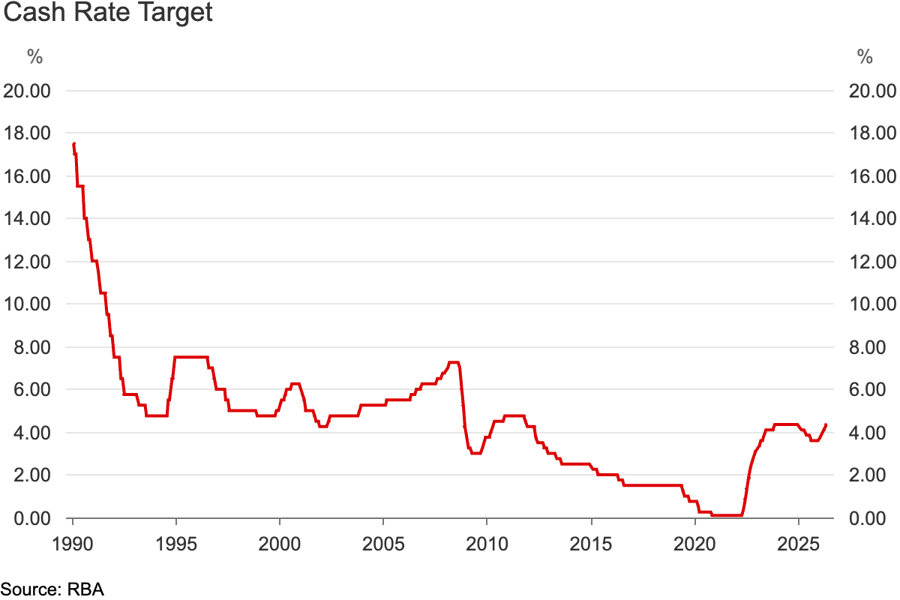
The Reserve Bank of Australia lifted the official cash rate yesterday afternoon in a bid to rein in inflation and made it clear that it isn’t just the Middle East conflict pushing up prices, but also capacity pressures in the economy. In what was supposed to be a tight run call, eight of the nine members of the RBA monetary policy board voted for a rate hike – the third this year. It takes the official cash rate back to where it was in late 2024, and it is almost 15 years since the rate has been any higher. It means a mortgage of $600,000 will cost homeowners an extra $90 a month. The three rate hikes this year, plus higher petrol prices add close to $500 a month to household bills, and that’s before food inflation kicks in.
This week, the team from Ausbiz, including Juliette Saly and Nadine Blayney, join us on Fear & Greed. Watch live at ausbiz.com.au and sign up for a daily market wrap at ausbiz.co/newsletter
Greed-o-meter
Forwarded from a friend? Sign up to our daily newsletter
35 years of interest rate policy
Listen to today's episode 🎧
Source: Reserve Bank of Australia