


Wall St v mid-term elections; SpaceX mobile plans; domestic airfares to rise
News in brief
SpaceX mobiles: Telstra shares fell 2.5 per cent amid reports Elon Musk's SpaceX is close to securing wireless spectrum that could allow Starlink satellites to connect directly to mobile phones. The development has also rattled telecommunications stocks overseas, raising questions about the long-term competitive position of traditional mobile operators.
Frydenberg comeback: Former treasurer Josh Frydenberg has called for the Coalition to reclaim the political centre and consider a broader GST in exchange for income tax cuts. Opposition Leader Angus Taylor has rejected increasing the GST, highlighting divisions over the party's economic direction.
Airfares rise: Virgin Australia is increasing ticket prices as higher fuel costs squeeze airline margins, with its fuel bill expected to reach $700 million in the December half. Qantas has also flagged fare increases and reduced capacity, adding to the cost of domestic travel.
Rosemount returns: Treasury Wine Estates has sold Rosemount, Ingoldby and Secret Stone to the Oatley family, 25 years after buying Rosemount for $1.5 billion. The undisclosed deal forms part of Treasury Wine's strategy to simplify its portfolio and concentrate on its strongest brands.
Coinbase the sharebroker: Cryptocurrency exchange Coinbase is preparing to offer trading in around 3,800 US-listed stocks and derivatives to Australian retail investors, subject to regulatory approval. The move would put it in competition with established investment platforms as it pursues ambitions to become an all-in-one exchange.
Fear-o-meter
Commonwealth Bank on wages growth:
Monthly wage growth eased noticeably in September, suggesting the boost from recent pay rises and inflationary pressures has not translated into sustained wage growth, according to the latest CommBank Wage and Labour Insights series.
Despite the drop off in monthly growth, annual wage growth held firm at 3.3%, while quarterly wage growth also remained unchanged at 0.8% over the three months to September.
CommBank Economist Harry Ottley said while the lack of movement in the data may seem unremarkable, it meant there’s a clear takeaway for the RBA’s inflation fight.
“Our data is showing that wage growth has not materially responded to higher actual and expected inflation, and the impact of the Fair Work Commission decision has been notable but limited,” Ottley said.
“This somewhat eases the risk that pure wage inflation will become a material additional concern for the RBA's inflation fight, though there is no shortage of other concerns on that score,” he added.
Fear & Greed Q+A today
On why AI can improve investing without necessarily improving returns:
"It can make us more efficient investors. I wouldn't use the word better. AI is an amazing tool that is used for operational purposes in particular. Throughout the investment process, there's a lot of efficiency that it could gain. Do things quicker, do things more robust, eliminate errors.
But we have studied whether it can help time markets and enable our portfolios to profit, to predict market patterns and profit from that. And unfortunately, there we still see there are some meaningful limitations there.
It's still a little bit difficult and mainly, that's to do with the fact that markets, there's just a huge amount of unexpected element that works into prices every single day. Even for really sophisticated models, it's really just that noise from actual information that you can use that's very hard to disentangle with market prices.... It's the fact that markets are actually an amazingly strong mechanism for incorporating new information into prices."
Wall Street's AI boom turns four - but risks are mounting
Wall Street's bull market has reached its fourth anniversary, with the S&P 500 more than doubling since the rally began. But the extraordinary rise of artificial intelligence stocks has left investors increasingly exposed to a handful of technology giants.
The ten biggest companies now account for 40 per cent of the S&P 500, up from 26 per cent four years ago and just 18 per cent a decade ago. Nvidia alone is worth almost 20 times what it was at the start of the rally, while semiconductor stocks have surged nearly 500 per cent.
AI investment has also become a major driver of the US economy, with Oxford Economics estimating it accounts for around one-third of recent economic growth.
But that concentration creates risks. If enthusiasm for AI fades, a relatively small number of companies could drag the broader market sharply lower.
Investors are also confronting rising interest rates, higher bond yields and uncertainty surrounding the US midterm elections. A change in control of Congress could complicate President Donald Trump's economic agenda, potentially affecting taxes and regulation.
Greed-o-meter
Forwarded from a friend? Sign up to our daily newsletter
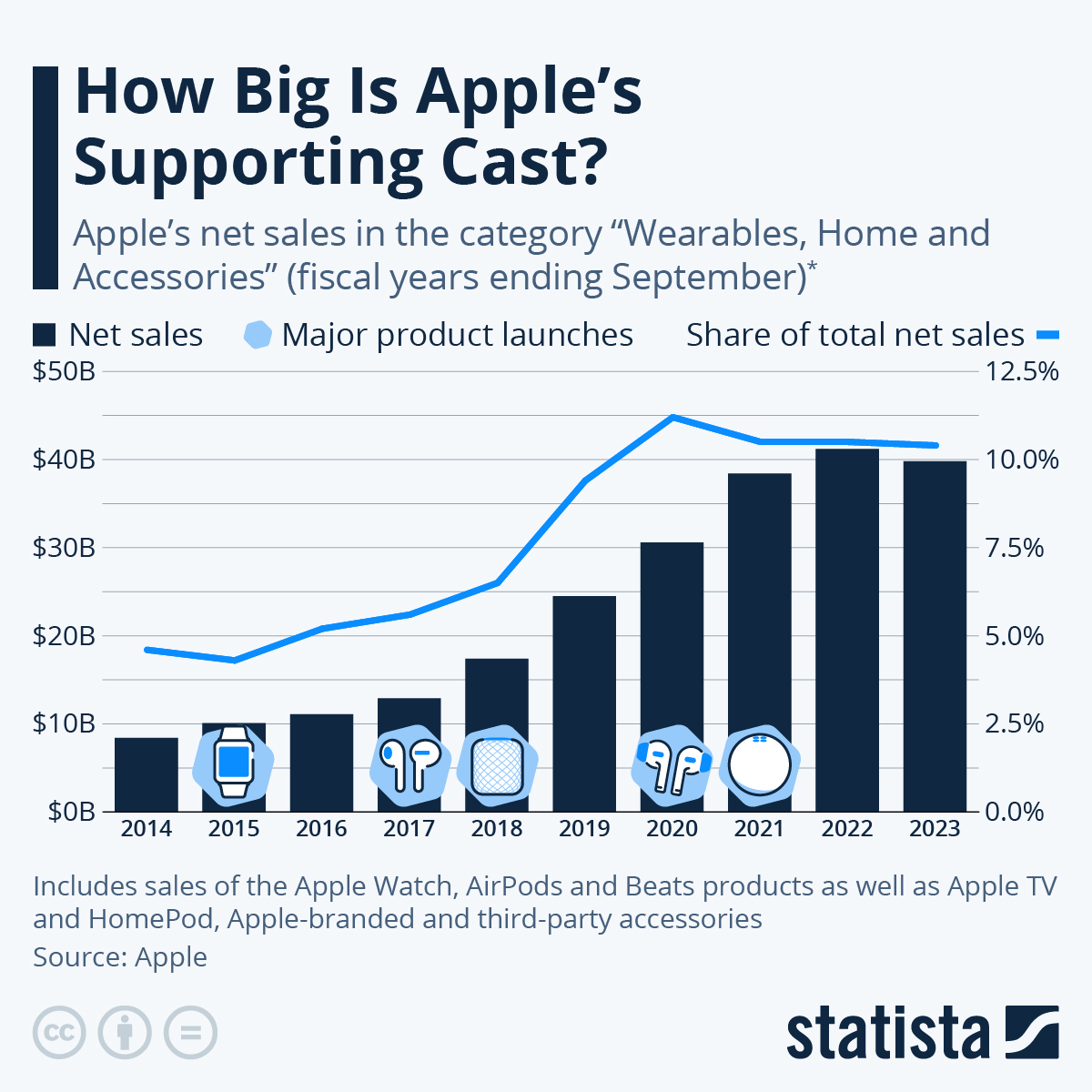
Apple is preparing for a busy October, with plans to unveil new smart home devices this week, followed by its first touch-screen MacBook and a new iPad mini later this month, according to Bloomberg. But Apple's smaller product categories are struggling. Sales of wearables, home devices and accessories have fallen for three consecutive financial years, with their share of total revenue dropping from 11.2 per cent in 2020 to just 7.5 per cent in the first nine months of 2026. Apple will be hoping its new products, particularly those powered by AI, can reverse that trend.